
ENGINE START – LOW PRESSURE GROUND START
Engine Start Lever
- Move the Engine Start Lever to START at approximately:
- 707A: 16% N2 RPM
- 707B/C: minimum 19% N2 RPM
- Observe a rise in N1 after introducing fuel. enginestart
Starter Limitation
- The starter must not cut out before 40% N2 RPM maximum.
- If necessary, place the Engine Start Control Switch to OFF.
- Keep one hand on the Engine Start Lever while observing:
- RPM
- EGT
- Fuel Flow
Abnormal Start
Move the Engine Start Lever to CUTOFF if:
- EGT rises excessively
- engine fails to light within approximately 20 seconds
- rapid EGT rise or abnormally high starting fuel flow indicates a possible hot start
After an unsuccessful start:
- Keep the engine motoring for approximately 20 seconds with the Start Control Switch in GROUND START to clear excess fuel.
- Observe starter limitations before another attempt.
- After a second unsuccessful start, the drain tanks must be empty before another start attempt.
During Start – Monitor
- Oil Pressure: Flight Engineer calls “OIL PRESSURE RISING”
- DC Ammeter / Loadmeter: Check for a small fluctuation when the Start Lever is moved to START.
- Maximum starting EGT:
- 707B/C: 450°C
- Engine Start Control Switch: OFF at starter cutout or approximately 34% N2 RPM, whichever occurs first.
- Observe pneumatic manifold pressure after starter cutout; pressure should recover.
- Low Oil Pressure Warning Light: check light out.
- Oil Pressure: check.
- Move the Engine Start Lever to IDLE when N2 reaches approximately:
- 707B/C: 50%
Failure to Accelerate
If the engine does not accelerate to idle RPM within approximately 2 minutes:
- Move the Engine Start Lever to CUTOFF.
- Do not reopen the Start Lever simply to restart the engine while it is still rotating.
ENGINE CHECK AT IDLE – 707B/C
Typical idle indications:
- EPR: approximately 1.06, depending on N2 idle RPM
- N1: approximately 30–32%
- EGT: approximately 250°C normal, 340°C maximum
- N2: approximately 66–68%
- Fuel Flow: approximately 500–600 kg/h
- Oil Pressure: approximately 38 psi
- Oil Temperature: depends on fuel temperature and outside temperature
- Engine Fuel Filter Temperature: approximately 10°C higher than No. 1 main tank fuel temperature
If fuel filter temperature is much higher than No. 1 main tank temperature, check that the fuel heater is closed.
TAXIING
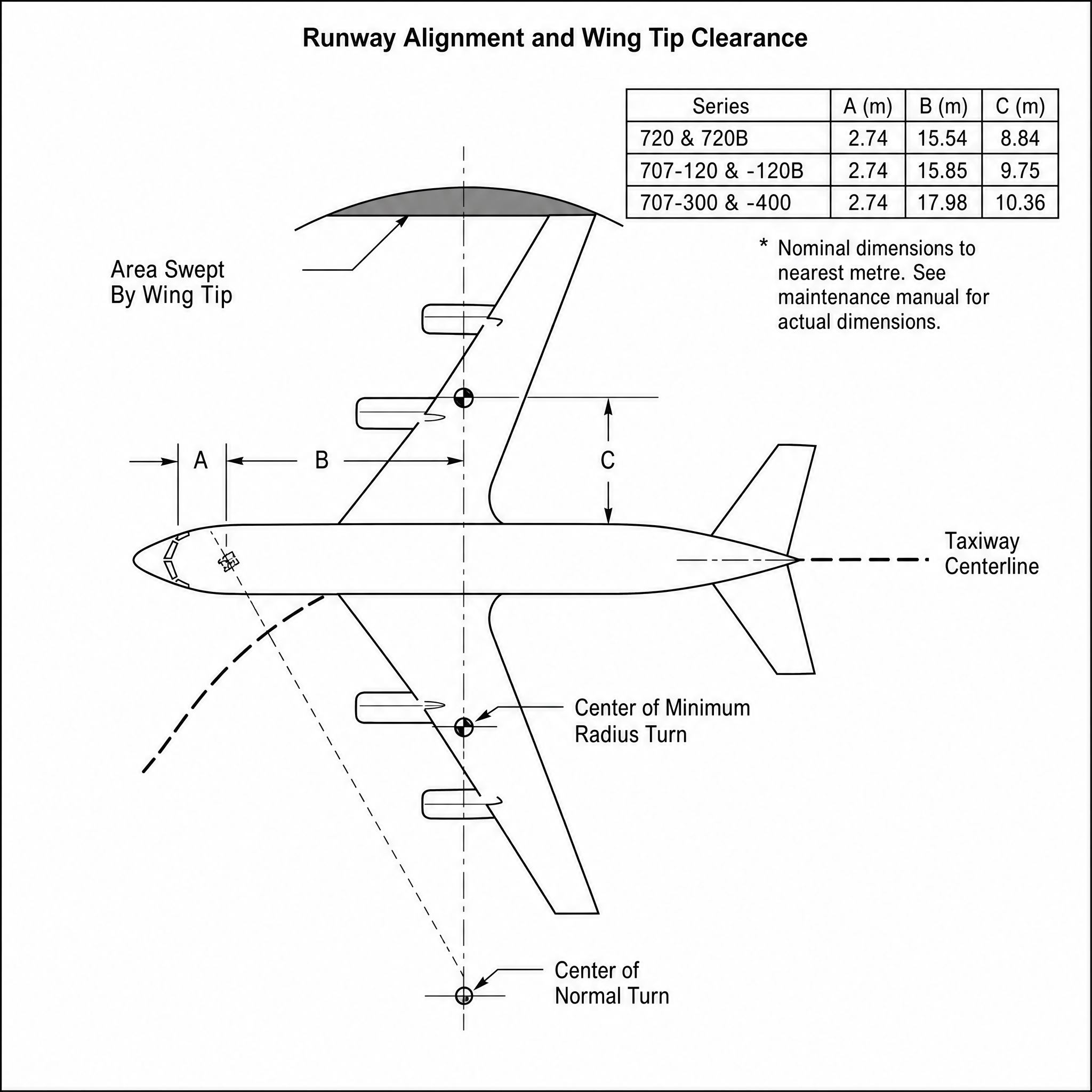
Runway Alignment & Wing Tip Clearance
- Taxi on the centerline, using the inboard foot on the line when taxiing straight.
- In turns, remember the swept wing tip moves inboard of
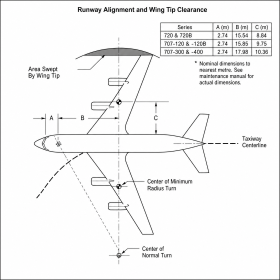 the center of turn and may also move outward.
 - The pilot will normally sit outside the centerline during a turn and may need to overshoot the centerline slightly when entering it.
- Use the largest practical turn radius.
- Minimum-radius turns can cause high side loads on the main gear and unnecessary tire scrubbing.
- When using landing lights for taxi, observe the 5-minute limitation; good visibility remains the priority. taxi
Thrust During Taxi
- The airplane is normally taxied with all four engines operating at equal forward thrust.
- Idle thrust is usually sufficient for normal taxi speeds.
- Low thrust reduces the risk of ingesting foreign objects.
- For short-radius turns, use the outboard engine as necessary to help maintain taxi speed, increase turn radius and reduce tire scrubbing.
Nose Wheel Steering
- Grip the steering wheel firmly and apply a smooth, continuous input in the desired direction.
- Avoid rough or abrupt steering inputs.
- After completing a turn, return the steering wheel to center/arrows aligned before stopping.
- Roll forward slightly to allow the nose and main wheels to center and reduce stress in the main gear.
- Avoid maximum nose-wheel steering combined with high taxi speed to reduce heavy side loading on the main gear struts.
Brakes
- Position the toes over the top of the brake pedals.
- Apply a small fixed pedal displacement and allow time for brake response.
- Increase pedal pressure only as required.
- Smooth, gentle braking gives better speed control and smoother stops.
- Avoid riding the brakes.
- Brake use during turns is not recommended.
Backing Up With Reverse Thrust
- Back the airplane only at very low speed.
- Reverse thrust required depends on ramp slope.
- Avoid high reverse thrust to reduce the risk of exhaust-gas ingestion.
- Confirm the area behind the airplane is clear.
- Do not apply brakes while moving backward, as this may cause the airplane to tip onto its tail.
- To stop, return the reversers to the forward-thrust position.
Cold Weather
For cold-weather operation, follow the applicable aircraft procedures and limitations.
TAKEOFF BRIEFING
Before each takeoff, the briefing should cover:
- seat adjustment
- alertness for irregularities
- callouts
- rejected takeoff
- departure procedure and EFP / engine failure procedure
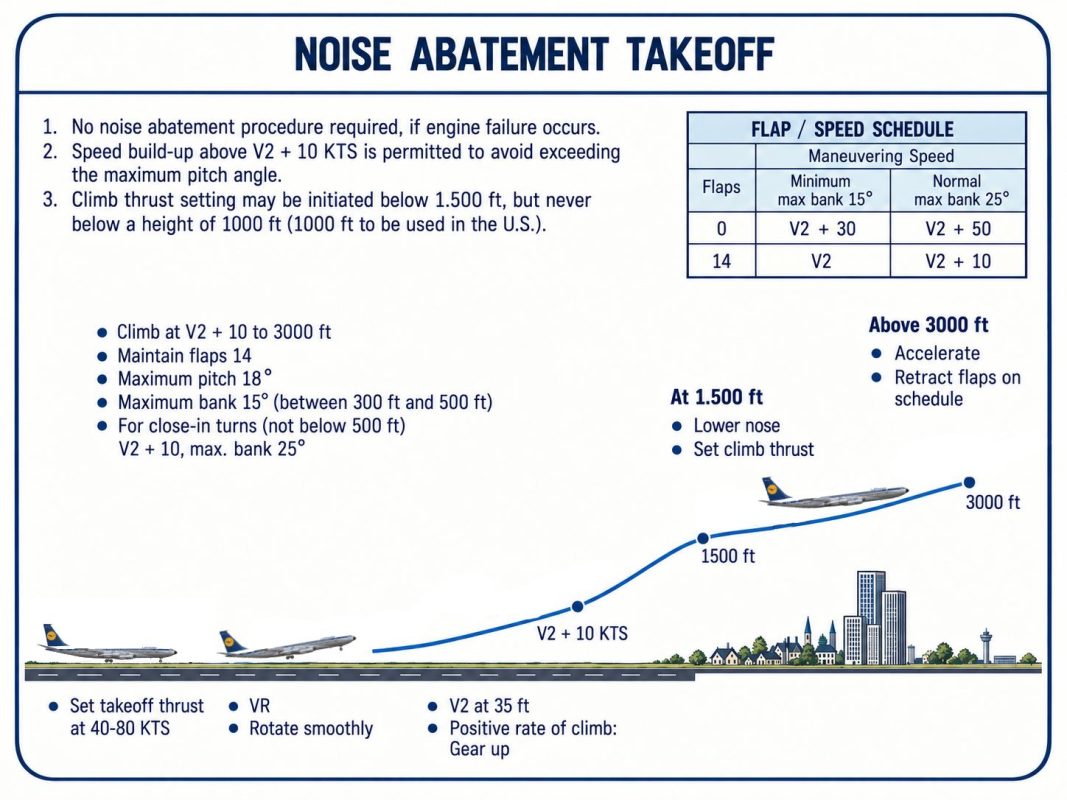
- anti-noise procedure
- adverse weather conditions