Skip to content
CRUISE & AIRWORK
Buffet Boundary
The high-speed and low-speed buffet boundaries define the usable maneuvering range of the airplane.
At altitude, the two buffet limits can move closer together, creating a buffet transition zone .
Increased load factor raises the effective aircraft weight and reduces buffet margin.
Example from the manual: a 25° bank increases load to about 1.10 g . cruise
At high speed, buffet may occur because of increased angle of attack and compressibility effects.
Pronounced buffet can occur at normal bank angles near the high-speed buffet boundary.
FLIGHT CONTROL CHARACTERISTICS
Longitudinal Control
Changes in thrust , flaps and speed brakes affect pitch and trim.
Increasing thrust tends to pitch the nose up .Decreasing thrust tends to pitch the nose down .Pitch changes can be corrected mainly with stabilizer trim.
Extending the landing gear at higher speeds causes a noticeable nose-up pitch .
Flaps are primarily intended for takeoff, approach and landing .
Flap Effects
At higher altitudes, lateral control capability decreases; therefore flap extension is limited to below 20,000 ft .
Flap extension from 0° to 14° causes a slight pitch-up .
From 14° onward , further extension tends to produce a nose-down pitch .
Larger flap extensions require noticeable trim changes.
Extending inboard flaps tends to pitch the nose up .
Extending outboard flaps tends to pitch the nose down .
Because outboard flaps have the greater effect, extension above 14° results overall in a nose-down tendency .
Speed Brakes
Rapid speed-brake extension can create a temporary nose-up pitch .
Raising only the inboard spoilers tends to pitch the nose down .
Raising only the outboard spoilers tends to pitch the nose up .
LATERAL CONTROL
Roll control is provided by:
inboard ailerons
outboard ailerons
spoilers
Full control-wheel travel raises the appropriate spoilers to about 40° .
If the control wheel is not fully displaced, spoiler response may be reduced.
With flaps up, the inboard ailerons , assisted by spoilers, provide roll control.
With outboard ailerons operating, full roll authority is available at lower flap settings.
DIRECTIONAL CONTROL
Primary directional control is by the hydraulically powered rudder .
If all auxiliary hydraulic pressure is lost:
the rudder reverts to a control-tab and balance-panel system
maximum rudder deflection is reduced to about half
pedal forces increase significantly. cruise
707 HANDLING CHARACTERISTICS
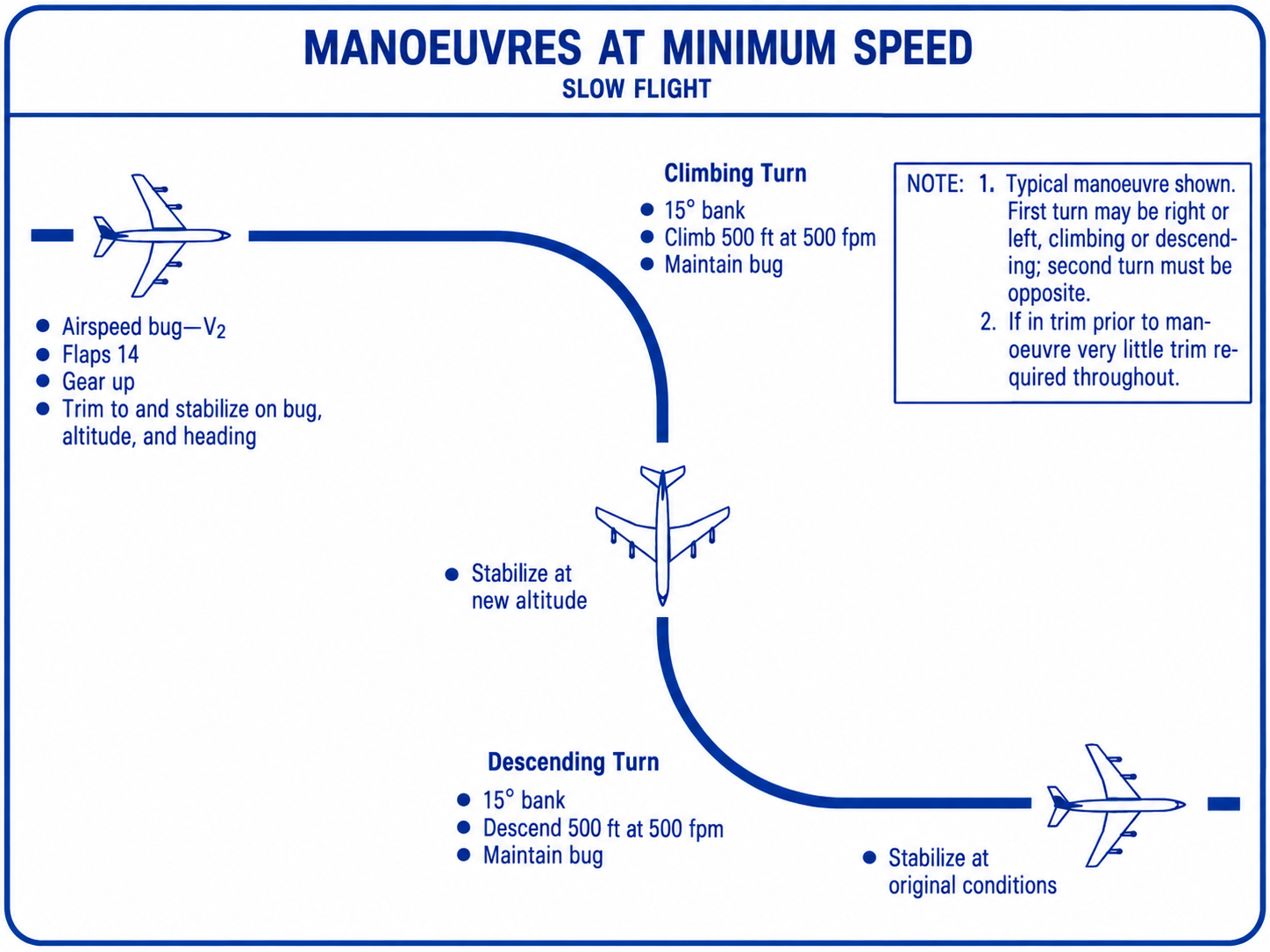
Control response is generally slow .
Allow time for aerodynamic response after control inputs.
Avoid unnecessary spoiler use to keep maneuvering smooth and comfortable.
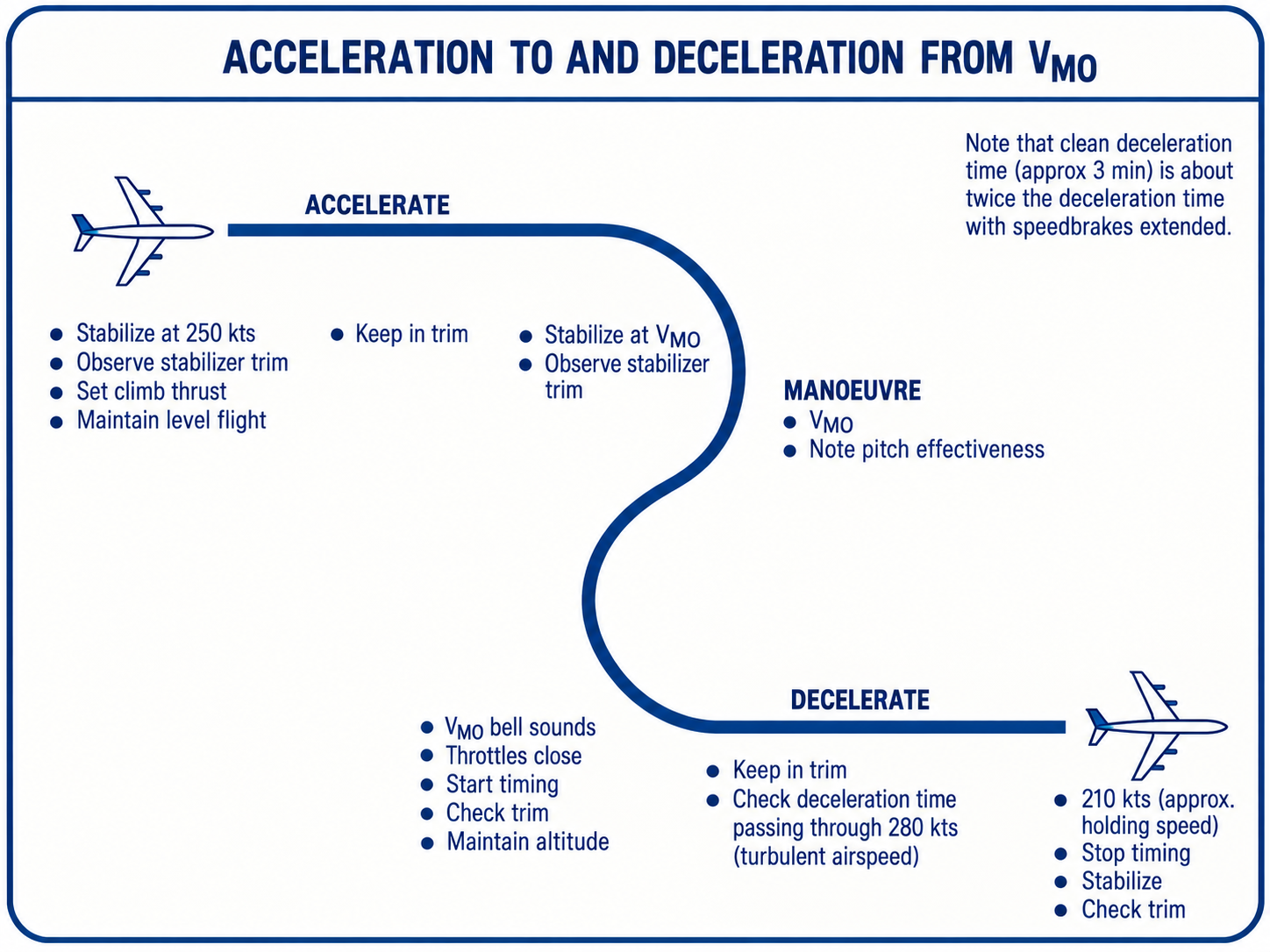
Use of inflight speed brakes under normal conditions is not recommended , because of aerodynamic backwash and increased stabilizer loads.
YAW DAMPER
The yaw damper should be used at all times , including:
taxi
takeoff
flight
landing
Normal turns are made mainly with aileron control .
The yaw damper provides the required rudder coordination.
MACH TRIM
Above approximately Mach 0.81 , the center of pressure moves aft.
This creates a natural nose-down pitching tendency .
The Mach Trim system counteracts this by commanding nose-up trim .
The system can be overridden by:
main electric trim
manual trim wheels.
We use cookies to ensure that we give you the best experience on our website. If you continue to use this site we will assume that you are happy with it. Ok